
Blog
BBS Factory Audemars Piguet Royal Oak 26574ST Perpetual Calendar QC Test

BBS Factory Audemars Piguet Royal Oak 26574ST Perpetual Calendar QC Test
This QC test covers the BBS Factory Audemars Piguet Royal Oak Perpetual Calendar 26574ST.OO.1220ST.02, featuring a full-steel construction, blue dial, sapphire crystal and a 9015-based movement modified into a Cal.5134-style configuration.
One point should be clarified before looking at the test results: BBS Factory is the current name used by the factory previously known as BBR Factory. The factory changed its name, so older BBR references and newer BBS listings may refer to versions from the same factory source.
For this particular watch, the most important part of the QC was not simply the exterior appearance. We physically tested the movement functions to determine whether the complications were operational or merely decorative.
Actual QC Data
QC Item Actual Test Result
Factory BBS Factory (formerly BBR Factory)
Reference 26574ST.OO.1220ST.02
Case / Bracelet Full Stainless Steel
Dial Blue
Crystal Sapphire
Movement 9015 modified to Cal.5134-style configuration
Daily Rate +9 s/day
Amplitude 246°
Beat Error 0.0ms
Beat Rate 28,800 BPH
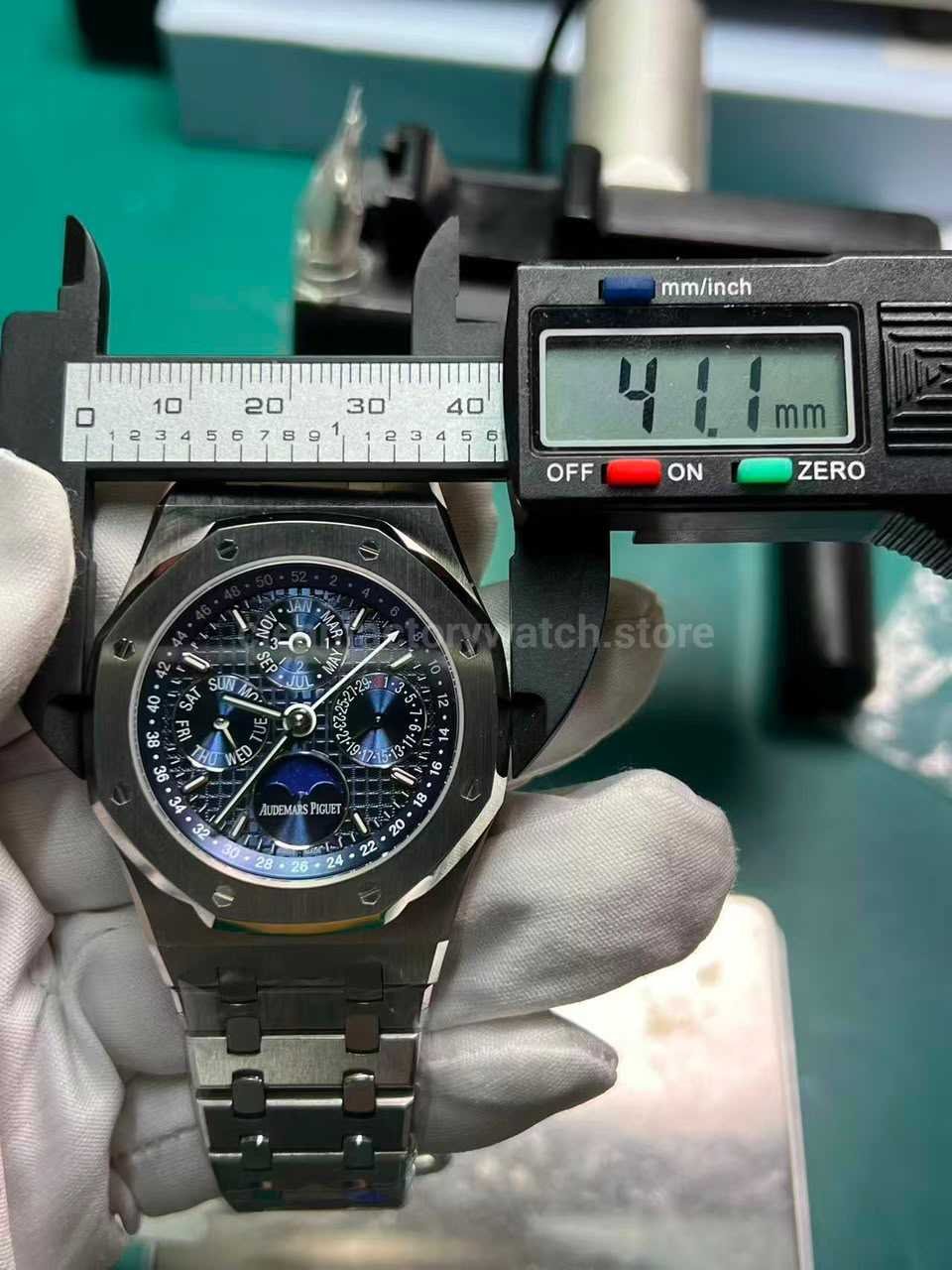
Width 41.1mm
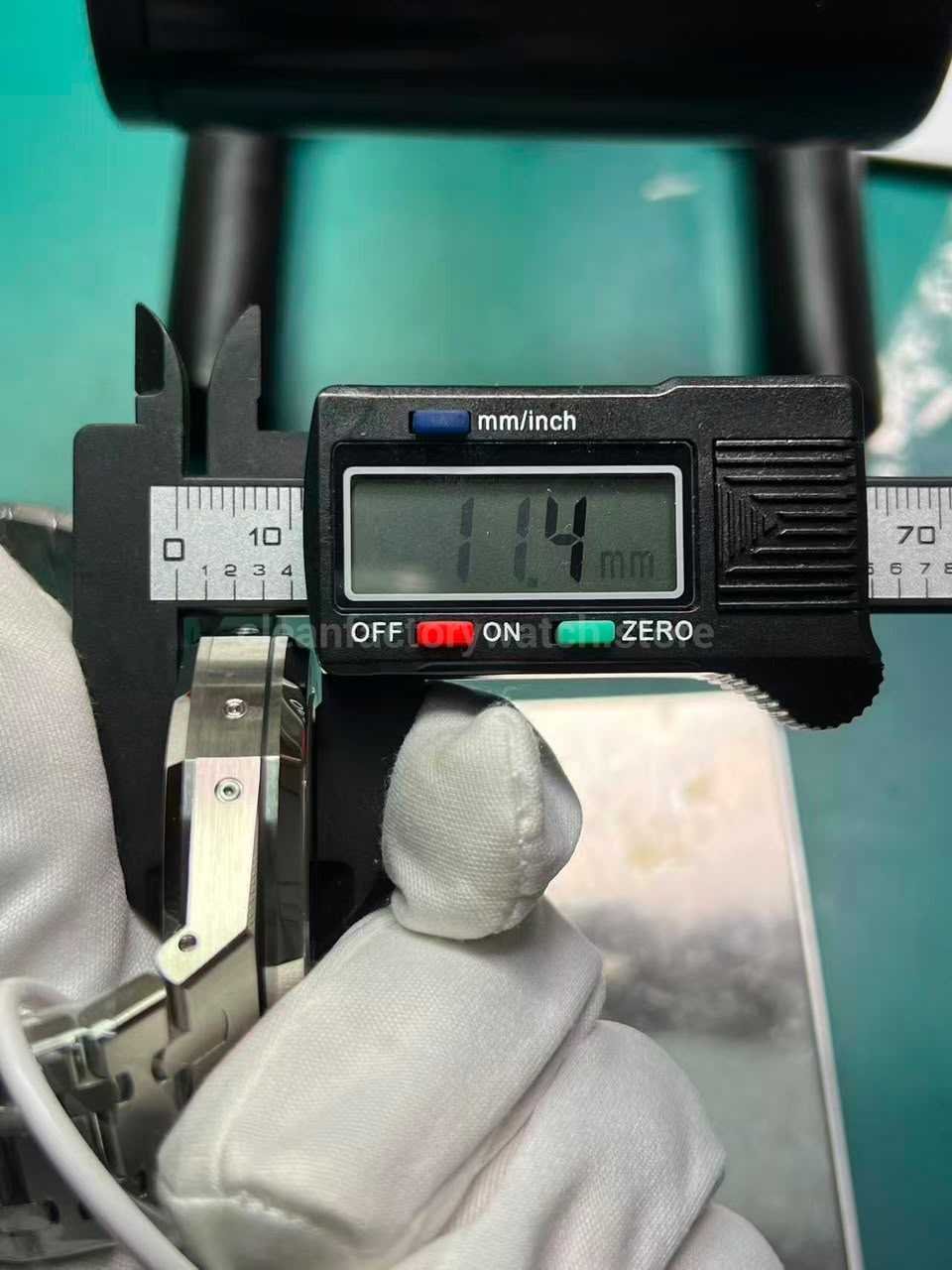
Thickness 11.4mm
Complication Test Functions tested and operational
These measurements belong to this individual QC sample. Small variations between watches can occur due to production tolerances, power reserve, testing position and measurement method.
Movement & Functional Test
The movement used in this BBS 26574ST is based on a 9015 architecture modified into a Cal.5134-style configuration.
This distinction is important because it should not be described as a native Cal.5134 simply because the visual layout and complication arrangement are designed around that movement.
More importantly, during this QC inspection we physically operated the complication system.
The functions tested on this sample were operational rather than decorative displays.
That is the main technical point worth documenting on this particular version. With a complicated watch, photographs of the dial or movement alone cannot confirm whether the individual displays actually function. Physical operation provides considerably more useful information.
Timegrapher Result
The movement recorded +9 seconds/day, with 246° amplitude, 0.0ms beat error and 28,800 BPH.
The +9 s/day result falls within our commonly used ±0–15 s/day pre-shipment reference range.
Rather than judging this movement from the daily rate alone, the timegrapher result should be considered together with the functional test because this is a substantially more complicated mechanism than a basic three-hand movement.
Actual daily accuracy can also change with power reserve, temperature, resting position and wearing habits.
What We Found
The most important finding from this QC sample is the level of functional complication implementation.
The 26574ST has a visually complicated dial, but the value of testing this type of watch comes from determining whether those displays are simply there to reproduce the appearance or whether the underlying mechanisms actually operate.
On this BBS sample, the tested functions worked.
That makes the movement implementation particularly interesting for buyers specifically looking for a Royal Oak Perpetual Calendar-style watch with working complications rather than decorative subdials.
The second useful observation is the actual case profile. This sample measured 41.1mm × 11.4mm, providing a physical reference for future comparisons with other 26574ST versions rather than relying only on listed specifications.
Working Complications Also Increase Mechanical Complexity
There is an important trade-off.
Reproducing more working functions requires a more complicated mechanical system. Compared with a simple time-and-date movement, there are more interacting components and therefore more potential areas that may eventually require adjustment, maintenance or repair.
This does not mean that the movement will necessarily develop a fault.
It means that buyers should not interpret “all functions work” as equivalent to “the movement can be operated repeatedly without consideration.”
In my view, the functional implementation is one of the reasons this version deserves attention, but it is also exactly why the watch should be operated more carefully.
Important Adjustment Advice
For this type of complicated movement, it is best to follow the adjustment instructions supplied for the specific version when setting the time and calendar functions.
Avoid repeatedly operating the correctors or cycling through the complications simply for demonstration or entertainment.
This is especially important because calendar mechanisms can already be engaging internally during certain parts of their operating cycle. Forcing an adjustment at an inappropriate point can place unnecessary stress on the mechanism.
A practical approach is:
Set the watch correctly according to its instructions, confirm that the indications are operating normally, and then avoid unnecessary manual manipulation of the complication system.
This is more important for long-term ownership than frequently demonstrating every available function.
Overall QC Assessment
This particular BBS Factory 26574ST is interesting primarily because of its working complication system, not simply because of its appearance.
The 9015-based Cal.5134-style movement recorded acceptable pre-shipment timegrapher results in this test, while the complication functions we tested were operational rather than decorative.
The trade-off is mechanical complexity. More functional complications mean more interacting parts and potentially more areas requiring attention over long-term use.
For someone specifically interested in a functional Royal Oak Perpetual Calendar-style configuration, this is a version worth examining. At the same time, correct adjustment procedures and restrained use of the manual complication controls are important considerations for long-term ownership.
FAQ
Is BBS Factory the same as BBR Factory?
For this version, BBS is the current factory name used for the factory previously known as BBR. Older information may therefore still refer to BBR Factory.
What movement is used in the BBS 26574ST?
This QC sample uses a 9015-based movement modified into a Cal.5134-style configuration. It should not be confused with a native Cal.5134 movement.
Are the calendar functions decorative?
On this specific QC sample, the functions were physically tested and were operational rather than decorative displays.
Should the complication functions be operated frequently?
Frequent unnecessary operation is not recommended. Because the movement incorporates multiple working complications, it is better to follow the correct adjustment instructions and avoid repeatedly manipulating the functions simply for demonstration.